As temperatures drop and winter approaches, horn fly control may not be top of mind---but it should be. Horn flies don't simply disappear with the cold. Their pupae can overwinter in the soil, setting the stage for next year's infestations. To help you stay ahead, we're answering some of the most common questions about horn flies, their economic impact, and how to control overwintering populations before they become next year's problem.
Q: Why are horn flies such a big concern for cattle producers?
A: Horn flies are the number one economic ectoparasite affecting North American cattle, causing an estimated $2.3 billion in losses each year. These small blood-feeding flies irritate cattle, leading to reduced grazing, weight loss, decreased milk production, and lower weaning weights. Profit losses begin once populations exceed 200 flies per animal, a threshold that untreated herds can quickly surpass, sometimes reaching thousands of flies per head.
Q: How can I tell if I have a horn fly problem?
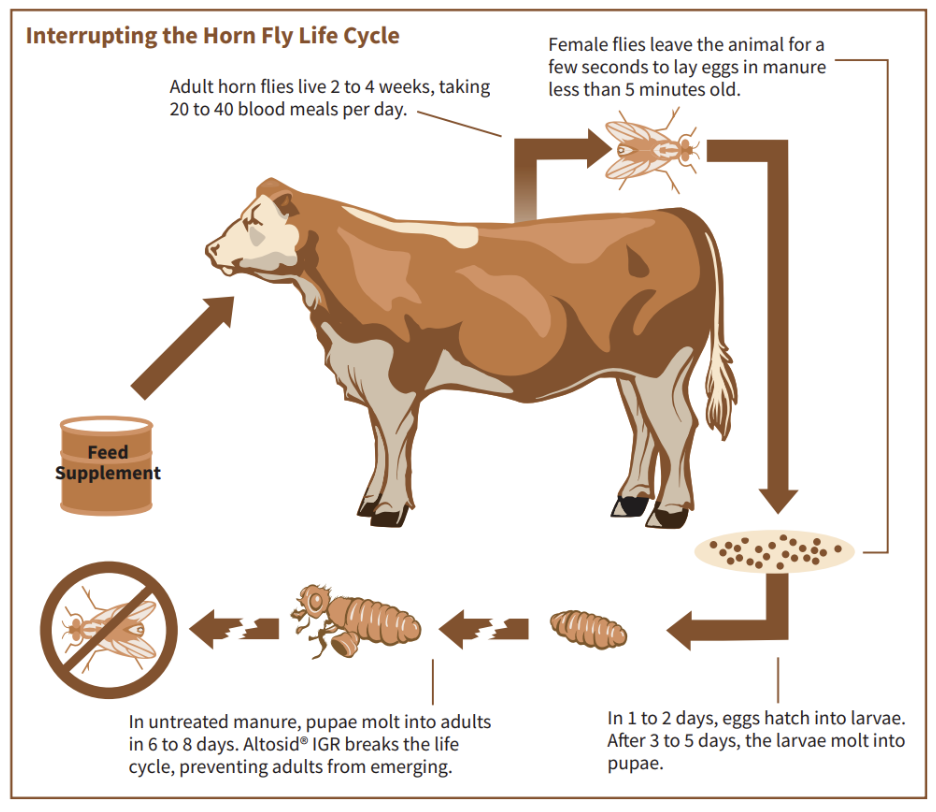
A: Horn flies cluster on the backs and sides of cattle, feeding throughout the day. They're about half the size of a house fly and lay eggs exclusively in fresh manure. Beyond irritation, horn flies spread diseases such as mastitis, reduce calf weaning weights, and cause stress that leads cattle to seek relief in shade or water instead of grazing.
Q: What happens to horn flies during the winter?
A: When temperatures drop, horn fly pupae can survive in the soil beneath manure pats. These overwintering pupae remain dormant until warmer weather returns, leading to a resurgence of flies the following spring. Without late season fly control, more pupae overwinter to jump-start early infestations next year.
Q: How can I prevent overwintering pupae from becoming next season's problem?
A: The most effective way is to follow the 30/30 Method recommended by Central Life Sciences. This simple, proactive approach helps break the horn fly life cycle and protect your herd year-round:
- Start Early: Begin feeding Altosid® IGR about 30 days before average daytime temperatures reach 60°F. This is when overwintering flies begin to emerge.
- Extend into Fall: Continue feeding for 30 days after the first frost to target late season horn flies and prevent them from adding to the overwintering pupa population.
- Support with IPM: Combine feed-through control with a strong Integrated Pest Management (IPM) program that includes cultural (sanitation), biological (natural predators), and chemical methods for the best long-term results.
Q: Why is continuous fly control important, even after the first frost?
A: Weather patterns are unpredictable, and late-season temperature spikes can reactivate fly activity. Maintaining Altosid® IGR in your feed for 30 days past the first frost ensures that any remaining larvae or pupae are impacted---reducing the number of flies that survive into winter and improving your odds for a low-fly spring.
Q: What's the benefit of using Altosid® IGR over other fly control methods?
A: Altosid® IGR provides effortless, feed-through protection, allowing cattle to help distribute fly control naturally as they graze. It's less labor-intensive than dust bags or back rubbers and has proven effective for over 40 years with no known cases of resistance. Because it targets flies before they emerge as reproductive adults, it's a smart choice for both prevention and long-term control.
Q: What kind of results can I expect?
A: Cattle protected with effective horn fly control typically gain 10--15 pounds more at weaning and avoid the 15--50 pounds of annual weight loss seen in untreated yearlings. Maintaining fly levels below the economic threshold supports better animal comfort, productivity, and profitability.
Bottom Line
Fly control shouldn't end with the first frost. By continuing Altosid® IGR for 30 days after frost and starting 30 days before temperatures hit 60°F, you'll reduce overwintering pupae, lower early-spring fly pressure, and set your herd up for a healthier, more productive season ahead.